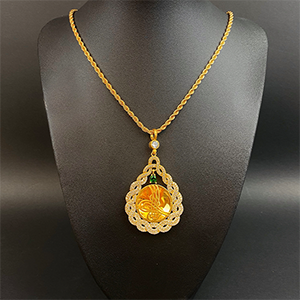
Personalised gold plated jewellery is jewellery that carries a gold layer over a base metal or silver core, and that has been customised with a name, initial, date, symbol or birthstone chosen by the buyer. In the UK it has become a common way to mark birthdays, christenings and anniversaries without paying solid-gold prices.
- UK hallmarking applies to solid gold above 1 gram, silver above 7.78 grams, platinum above 0.5 grams and palladium above 1 gram; plated items are not hallmarked as precious metal.
- Gold vermeil is conventionally defined as at least 2.5 microns of gold over a sterling silver base.
- UK nickel restrictions limit nickel release to 0.2 micrograms per square centimetre per week for items in prolonged skin contact.
- Under UK distance selling rules, personalised goods are generally exempt from the 14-day cancellation right, while faulty items remain covered by statutory rights.
- Typical gold plating thickness ranges from under 0.5 microns for flash plating to around 2.5 microns for heavier plating.
Table of Contents
- What counts as personalised gold plated jewellery?
- How does gold plating work, and how long does it last?
- Is gold plated jewellery hallmarked in the UK?
- Which personalisation options work best on plated pieces?
- What chain length and size should you choose?
- What should personalised gold plated jewellery cost in the UK?
- How do you look after personalised gold plated jewellery?
- Frequently Asked Questions
If you are new to buying plated pieces online, it helps to see how a specialist such as Mad Gold İmitasyon lays out its personalisation options before you compare anything else.
What counts as personalised gold plated jewellery?
Personalised gold plated jewellery is a piece made from a base metal or silver core coated with a thin layer of gold, then customised with a name, initial, date or birthstone chosen by the buyer.
The phrase covers two separate ideas. 'Gold plated' describes how the piece is made: a base metal such as brass or copper, or sometimes sterling silver, is coated with gold. 'Personalised' describes what has been added: an engraved name, a stamped initial, a small charm or a set birthstone.
A plated piece is not solid gold, and it should never be sold as such. The gold layer is measured in microns, and that measurement — not the colour of the metal — is what determines how the piece will wear over months and years of daily use.
In the UK, personalised plated jewellery is bought mainly as a gift. Popular choices include name necklaces, initial studs, birthstone bracelets and engraved bangles, often for birthdays, christenings, graduations and anniversaries. Buyers usually want a personal detail that is visible but subtle.
How does gold plating work, and how long does it last?
Gold plating is applied by electroplating a thin gold layer onto a base metal, and how long it lasts depends mainly on the thickness of that layer and how the piece is worn.
During electroplating, the base piece is suspended in a bath containing dissolved gold, and an electric current deposits the metal onto its surface. The result is a continuous gold layer, usually between 0.5 and 2.5 microns thick. A human hair is roughly 70 microns wide, so these layers are extremely thin.
Thin 'flash' plating, often under 0.5 microns, looks fine on day one but wears through quickly on rings and bracelets, which rub against surfaces constantly. Chains and earrings usually last longer because they touch less. A thicker layer of 1 to 2.5 microns gives noticeably better durability.
Vermeil sits at the top of the plated range. It is conventionally defined as at least 2.5 microns of gold over a sterling silver base, which is a stricter standard than ordinary plating and is the main reason vermeil costs more.
Is gold plated jewellery hallmarked in the UK?
No — gold plated items are not hallmarked as gold in the UK, because the Hallmarking Act 1973 applies to solid precious metal articles above set weights rather than to plated base metal.
UK hallmarking applies to solid gold, silver, platinum and palladium above defined weights: 1 gram for gold, 7.78 grams for silver, 0.5 grams for platinum and 1 gram for palladium. Anything below those weights is exempt, and plated items fall outside the hallmarking system altogether.
That does not mean plated jewellery is unregulated. Nickel release is restricted in the UK, with a limit of 0.2 micrograms per square centimetre per week for items in prolonged skin contact. Reputable sellers state the base metal and the plating thickness clearly on the product page.
If a listing implies that a plated piece is solid gold, treat that as a warning sign. Honest descriptions say 'gold plated' or 'vermeil' and name the base metal. If the information is missing, ask the seller before you order.
Which personalisation options work best on plated pieces?
Shallow machine engraving, raised initial charms and bezel-set birthstones work best on plated jewellery, because they add detail without cutting deeply into the gold layer.
Engraving is the most common option. On plated metal, a fine, shallow cut is safer than deep hand engraving, which can expose the base metal underneath. On the back of a pendant or the inside of a bangle, a light engraving wears slowly and stays legible for a long time.
Charms and added letters avoid cutting altogether. A separate initial charm or a small hanging letter is attached to the chain rather than carved into it, so the plating on the main piece stays intact. This works particularly well on gold plated necklaces and bracelets.
Birthstones and cubic zirconia settings are also popular for gifts. A bezel setting, where metal wraps around the stone, protects both the stone and the surrounding plating better than a prong setting, which can catch on clothing and loosen over time.
What chain length and size should you choose?
For UK buyers, a 40 to 45 cm chain sits at the collarbone, 50 to 60 cm works for layering over clothing, and most bracelets are ordered at 17 to 19 cm with an extender for adjustment.
Chain length changes how a personalised pendant looks far more than the pendant itself. A 40 cm chain sits close to the throat, 45 cm rests on the collarbone, 50 cm falls just below it, and 60 cm or more drops over a jumper. Measure an existing necklace that fits well.
Bracelet sizing follows the same logic. A 17 cm bracelet suits many adults, 18 to 19 cm is a common larger size, and an extender chain of 3 to 5 cm covers most doubt. For rings, UK sizes run alphabetically from A to Z, and plated rings usually cannot be resized.
If you are buying as a gift without measurements, choose a mid-range length and an adjustable fastening. A 45 cm necklace and an 18 cm bracelet with an extender are the safest defaults, and they are the sizes most UK sellers keep in stock.
What should personalised gold plated jewellery cost in the UK?
Personalised gold plated jewellery in the UK generally costs between about £15 and £80, with plating thickness, base metal and the complexity of the personalisation driving the price.
At the lower end, around £15 to £30, expect thin plating on a brass base and simple stamped initials. Mid-range pieces from about £30 to £60 usually carry thicker plating, a better finish and neater engraving. Above £60 you are often paying for vermeil or a heavier chain.
Be sceptical of very cheap personalised pieces that promise years of wear. Plating thickness costs money, and a price that undercuts the market usually means a layer measured in fractions of a micron. Check whether the seller states microns, base metal and a care guide.
Also factor in delivery and returns. UK consumer law gives you cancellation rights on distance sales, but personalised goods are generally exempt from the standard 14-day change-of-mind return. Confirm the policy before ordering an engraved piece, and read our guide to waterproof gold plated jewellery if everyday wear matters to you.
How do you look after personalised gold plated jewellery?
Keep plated jewellery dry, apply perfume and hairspray before putting it on, and store each piece separately in a dry pouch to slow wear on the gold layer.
The main enemies of plating are moisture, chemicals and friction. Water, chlorine, sunscreen, perfume and cleaning products all attack the gold layer, and repeated contact speeds up fading. Remove plated pieces before showering, swimming, exercising or washing up.
Order of dressing matters. Makeup, perfume and hair products should go on first; jewellery goes on last and comes off first at the end of the day. Wipe pieces with a soft dry cloth after wearing to remove oils and perspiration.
Store pieces individually. Plated surfaces scratch each other when they are jumbled in a box, so use a soft pouch or a lined compartment. If a piece is engraved, avoid abrasive polishes, which can round off the fine detail of the lettering over time.
The same care applies whether you are choosing a plain chain or a layered set of gold plated necklaces, so check the clasp and jump rings before you commit.
Frequently Asked Questions
Does gold plated jewellery tarnish in the UK climate?
It can. Humidity and damp air speed up tarnishing on brass and copper bases, and indoor damp is common in British winters. Keeping pieces dry and storing them in sealed pouches slows the process considerably. Tarnish is usually surface-level and can be wiped away with a soft dry cloth, though worn plating cannot be restored at home.
Can I wear personalised gold plated jewellery every day?
You can, but daily wear shortens the life of the plating, especially on rings and bracelets. If you want a piece for everyday use, choose 1 micron or more, or consider vermeil, and remove it before showering or exercising. Rotating two or three pieces also extends the life of each one.
Is engraving worth it on plated jewellery?
Yes, provided the engraving is shallow. A light engraving on the back of a pendant or inside a bangle stays readable and does not break through the gold layer. Deep engraving or heavy hand-cutting is better suited to solid metal, where there is no thin coating to damage.
What is the difference between gold plated and gold vermeil?
Gold plated jewellery has a thin gold layer, often 0.5 to 2 microns, over any base metal. Vermeil conventionally means at least 2.5 microns of gold over sterling silver, so the layer is thicker and lasts longer. Vermeil is also more expensive because both the base metal and the gold content cost more.
Do personalised items qualify for a refund in the UK?
Personalised or customised goods are usually excluded from the 14-day cancellation right under UK distance selling rules. Faulty items are still covered by your statutory rights, so you can always claim for a defect. Check the seller's policy before ordering engraving, and keep your order confirmation.
Ask for the Plating Spec First
Message the seller for the gold-layer thickness in microns on the exact piece you want, and confirm in writing that the returns policy covers plating wear before you pay.
See more