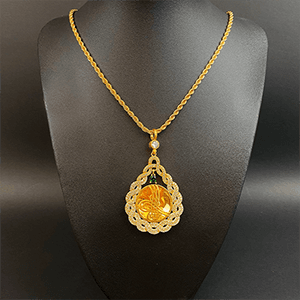
Gold plated jewelry that doesn't tarnish is jewelry whose gold finish is engineered to resist discoloration — usually through a thicker gold layer or a PVD (physical vapor deposition) coating over a stable base metal. Pure gold never tarnishes on its own. When plated jewelry darkens, the reaction is happening underneath the gold, in the base metal.
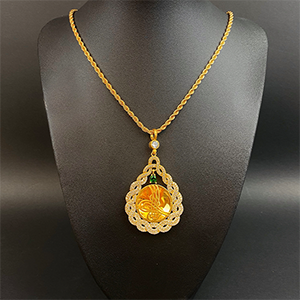
- Pure gold does not tarnish; visible discoloration on gold plated jewelry comes from the base metal reacting with moisture, oxygen, and skin oils beneath the gold layer.
- Vermeil is defined in the United States as a gold layer of at least 2.5 microns over sterling silver.
- PVD coatings are applied in a vacuum chamber and bond to metal at a molecular level, making them more corrosion-resistant than electroplated gold finishes.
- Flash plating is typically around 0.5 microns thick, while mid-range plated jewelry generally uses 1 to 2 microns of gold.
Table of Contents
- Why Gold Plated Jewelry Tarnishes in the First Place
- What "Doesn't Tarnish" Actually Means for Plated Jewelry
- PVD Coating: The Most Tarnish-Resistant Gold Finish Available
- Plating Thickness, Base Metal, and Other Quality Signals
- How to Care for Gold Plated Jewelry So It Stays Bright
- Everyday Habits That Wear Plating Down Fastest
- Buying Checklist for Tarnish-Resistant Gold Plated Jewelry
- Frequently Asked Questions
Before judging any finish by its shine, it helps to know what separates a coating that survives daily wear from one that fades within weeks, and gold plated necklaces are the clearest place to see that difference.
Why Gold Plated Jewelry Tarnishes in the First Place
Gold plated jewelry tarnishes because moisture, sweat, and air reach the base metal under the gold layer, and that metal reacts while the gold itself stays chemically stable.
Pure gold is one of the least reactive metals used in jewelry. It does not rust, and it does not develop the dark film people call tarnish. That is why a solid 14K or 18K gold ring can sit in a drawer for years and still look new.
Plated jewelry works differently. A thin gold layer covers a cheaper core, usually brass, copper, zinc alloy, or stainless steel. Gold is soft and the layer is thin, so microscopic wear and pores let sweat, oxygen, and skin oils pass through. The base metal oxidizes, and the discoloration shows through the gold.
This is why tarnish on plated pieces appears first at contact points: the inside of a gold plated bracelet, the back of an earring, the underside of a pendant. Those are the areas that touch skin and moisture most often.
What "Doesn't Tarnish" Actually Means for Plated Jewelry
No gold plated piece is completely tarnish-proof; in practice, "doesn't tarnish" describes a finish that resists visible discoloration for months or years of normal wear rather than forever.
Marketing language around plated jewelry is loose. Terms like non-tarnish, tarnish-free, and waterproof are not regulated standards, so they mean whatever a seller wants them to mean. No independent body certifies a plated piece as permanently tarnish-resistant.
The honest version is a timeline. Basic flash plating might discolor within a few weeks of daily wear. A well-made piece with a thicker gold layer and a protective top coat can hold its color for a year or more with reasonable care. PVD-coated pieces often keep their finish for several years.
When you shop, translate "doesn't tarnish" into "resists tarnish longer," then ask which construction method earns that claim.
PVD Coating: The Most Tarnish-Resistant Gold Finish Available
PVD coating is applied in a vacuum chamber and bonds a hard gold-colored layer to the metal at a molecular level, which makes it far more resistant to tarnish, scratching, and fading than traditional electroplating.
PVD stands for physical vapor deposition. The jewelry goes into a vacuum chamber, and a metal vapor — often titanium nitride or zirconium nitride for gold tones — condenses onto the surface and fuses with it. The result is a hard, ceramic-like layer rather than a soft electroplated film.
Because the bond is atomic rather than adhesive, PVD coatings resist corrosion, sweat, and salt water much better than electroplating. Many stainless steel watches, fitness trackers, and kitchen faucets use the same process, and their finishes survive daily handling for years.
The trade-offs are real. PVD colors are limited, repairs are difficult, and the coating can chip under heavy impact instead of wearing away gradually. For everyday rings and bracelets, though, it is currently the closest thing to a gold finish that doesn't tarnish.
Plating Thickness, Base Metal, and Other Quality Signals
A thicker gold layer over a corrosion-resistant base metal such as stainless steel or brass resists tarnish far better than a thin gold flash over a reactive alloy.
Plating thickness is measured in microns. Flash plating, the cheapest option, sits around 0.5 microns and wears quickly. Mid-range jewelry often uses 1 to 2 microns. Vermeil is a defined standard in the United States: at least 2.5 microns of gold over sterling silver.
Base metal matters just as much. Stainless steel is highly resistant to corrosion, which means there is less to tarnish even where the plating thins. Brass is a reasonable middle ground. Copper and zinc alloys discolor fastest and are the usual culprits behind jewelry that turns skin green.
Gold filled is a separate category worth knowing. It carries a bonded gold layer that makes up a much larger share of the total weight, and it typically outlasts plated jewelry by years.
How to Care for Gold Plated Jewelry So It Stays Bright
Keeping plated jewelry dry, wiping it after each wear, and storing it in an airtight pouch removes the moisture and oils that drive tarnish before they reach the base metal.
The care routine is simple and takes seconds. Take jewelry off before showering, swimming, or washing dishes. Wipe each piece with a soft dry cloth after wearing it, especially in summer when sweat and sunscreen sit on the surface.
Store pieces individually in airtight bags or a lined box. Air, humidity, and metal-on-metal contact all accelerate wear. A silica packet in the drawer helps in humid climates. Your gold plated necklaces and gold plated earrings will hold their color noticeably longer this way.
Clean gently with lukewarm water and a drop of mild soap, then dry completely. Skip ultrasonic cleaners, polishing cloths made for solid gold, and anything containing ammonia or abrasives.
Everyday Habits That Wear Plating Down Fastest
Perfume, sunscreen, chlorinated pools, and abrasive cleaners strip gold plating faster than normal wear does, so putting jewelry on last and taking it off first is the single most effective habit.
Chemicals do more damage than friction. Alcohol-based perfume, hairspray, and sunscreen break down thin gold films on contact. Let lotions and sprays dry completely before putting jewelry on.
Chlorine and salt water are hard on plated pieces. A single long swim in a chlorinated pool can dull a plated bracelet noticeably, because chlorine attacks both the gold layer and the base metal underneath it.
Gym equipment, housework, and sleeping are the other quiet culprits. Rings and bracelets take constant pressure and abrasion in those settings. Removing them for an hour costs nothing and can add months of life to the finish.
Buying Checklist for Tarnish-Resistant Gold Plated Jewelry
Before buying, confirm the plating method, the gold layer thickness, and the base metal, then set realistic expectations for how long the finish will hold up.
Start with the product description. Look for a stated plating method, whether PVD or electroplated, and a stated thickness in microns. A seller who lists neither is usually selling flash plating.
Check the base metal next. Stainless steel and brass are safer bets than an unspecified alloy. If a listing says gold tone without mentioning gold content, treat it as costume jewelry with a short lifespan.
Finally, match the piece to how you will wear it. Earrings and pendants rarely touch much skin, so lighter plating lasts longer there. Bracelets, rings, and matching gold plated jewelry sets take the most abuse, and a detailed piece like zircon stone necklaces deserves the better construction if you plan to wear it often.
Because they rub against skin, sleeves, and desk edges all day, gold plated bracelets are where plating thickness and a proper barrier layer prove whether they were built to last.
Frequently Asked Questions
Does gold plated jewelry tarnish?
Yes, it can. The gold layer itself does not tarnish, but the base metal beneath it reacts with moisture, oxygen, and skin oils once the plating thins or develops pores. How quickly that happens depends on plating thickness, the base metal, and how often you wear the piece.
How long does gold plated jewelry last without tarnishing?
With flash plating, discoloration can appear within weeks of daily wear. A 1 to 2 micron gold layer over brass typically holds its color for several months to a year, and PVD-coated pieces often look good for several years with basic care.
Is PVD-plated jewelry better than regular gold plating?
For tarnish and scratch resistance, generally yes. PVD forms a harder, molecular-level bond that resists corrosion, sweat, and salt water. The trade-offs are fewer color options and limited repairability once the coating is damaged.
Can tarnished gold plated jewelry be restored?
Sometimes. A soft cloth with mild soap and water removes light surface film. Once the gold layer has worn through and the base metal is exposed, the piece needs replating, which often costs more than replacing it.
Does 18K gold plated jewelry tarnish?
The karat number describes the purity and color of the gold used for plating, not how thick the layer is. An 18K gold plated piece with a thin layer still tarnishes, so thickness and the base metal matter more than karat.
Check the Base Metal Before You Buy
Open the product page or message the seller and confirm the base metal and the barrier layer sitting under the gold, since that combination matters more than the carat label on the finish.
See more