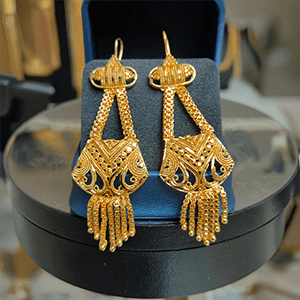
Gold plated earrings for sensitive ears are earrings with a thin layer of gold over a base metal, selected so that the parts touching your piercing release as little nickel as possible. In the UK, choosing well means checking the plating thickness, the base metal and the material of the post, not just the colour of the finish. This guide explains what actually irritates sensitive ears, what UK rules require, and how to shop for gold plated earrings that stay comfortable through everyday wear.
- Under retained UK REACH, items inserted into pierced ears must release no more than 0.2 micrograms of nickel per square centimetre per week, while items in prolonged skin contact are limited to 0.5 micrograms.
- Gold vermeil is conventionally defined as a gold layer of at least 2.5 microns over sterling silver, whereas gold plated finishes can be thinner than 0.5 micron.
- There is no legal definition of the term hypoallergenic for jewellery sold in the UK, so it functions as a marketing claim rather than a regulated standard.
- Nickel is one of the most common causes of allergic contact dermatitis in Europe, and once sensitisation occurs it is generally permanent.
Table of Contents
- What actually causes irritation from earrings?
- Does UK law limit nickel in earrings?
- Gold plated, gold filled, vermeil or solid gold: what is the difference?
- Which metals are safest for sensitive ears?
- How do you judge gold plating before buying online?
- Everyday care that protects the plating and your ears
- Which styles suit sensitive piercings best?
- What should you do if your ears still react?
- Frequently Asked Questions
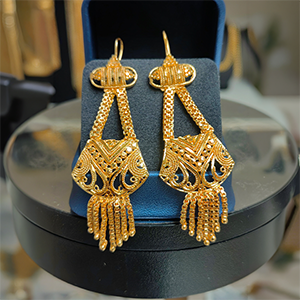
Because drop and dangle earring styles hang away from the lobe and swing against your jaw and neck, their weight and finish matter just as much as the metal in the post.
What actually causes irritation from earrings?
Irritation usually comes from nickel or cobalt leaching out of the base metal, or from rough finishes and trapped moisture, rather than from the gold layer itself.
Nickel is the most common metal allergen in the UK and across Europe. It is cheap, hard and bright, so it appears in many alloys used for costume jewellery, watch cases, zips and earring posts. When nickel touches broken or damp skin, the immune system can begin reacting to it.
Once that reaction starts, it tends to be permanent. Symptoms appear where the metal has been in contact: redness, itching, small bumps, flaking or a weeping rash. Ear piercings are especially vulnerable because the post sits inside a channel of skin that stays slightly moist.
Cobalt, chromium and, less often, copper can trigger similar reactions. Rough edges, heavy earrings that pull on the lobe, and trapped cleaning solution can all cause irritation that looks like an allergy but is really mechanical or chemical.
Gold itself is very unreactive, and pure 24 carat gold rarely causes problems. The difficulty is that pure gold is soft, so earrings are usually made from an alloy or from a base metal with a gold coating, and it is the metal underneath that decides how your ears behave.
Does UK law limit nickel in earrings?
Yes, retained UK REACH caps nickel release from items inserted into pierced ears at 0.2 micrograms per square centimetre per week.
Retained UK REACH sets a nickel release limit for items inserted into pierced ears, including earring posts and sleepers. The limit is 0.2 micrograms of nickel per square centimetre per week. Products in prolonged contact with skin, such as necklaces and bracelets, are capped at 0.5 micrograms.
The rule is about release, not presence. A metal can contain nickel and still comply if it holds the nickel tightly enough. That is why 'nickel free' and 'hypoallergenic' labels deserve caution, because neither term has a legal definition for jewellery sold in the UK.
Enforcement is lighter than many shoppers assume, and online marketplaces carry a lot of untested stock. If a seller cannot tell you what the posts are made of, treat that pair as a risk for sensitive ears.
Gold plated, gold filled, vermeil or solid gold: what is the difference?
Solid gold is the same alloy throughout, vermeil is a thick gold layer over sterling silver, gold filled is a bonded gold layer over a base metal, and gold plated is the thinnest of the four.
Solid gold earrings are the same alloy all the way through, so nothing wears away to expose a different metal. They cost the most and are the least likely to cause trouble, provided you avoid alloys blended with nickel.
Gold vermeil is a thick gold layer, conventionally at least 2.5 microns, over sterling silver. Gold filled describes a bonded layer of gold alloy over a base metal, often marked 14/20, meaning one twentieth of the weight is 14 carat gold.
Gold plated covers everything from a flash coating of well under 0.5 micron to a 3 micron layer. Flash plating is common on inexpensive fashion earrings and can wear through in weeks, exposing the base metal at exactly the point that touches your skin.
Which metals are safest for sensitive ears?
Implant-grade titanium, niobium and 14 to 18 carat solid gold are the safest everyday choices, while sterling silver and 316L stainless steel suit many but not all sensitive wearers.
Implant-grade titanium is the usual recommendation for new and sensitive piercings. It is lightweight, free of nickel at the grades used for body jewellery, and it does not tarnish. Niobium behaves in much the same way and can be anodised into warm gold tones.
Solid 14 or 18 carat gold is an excellent long-term choice, though some gold alloys contain trace elements worth checking. Sterling silver suits most sensitive wearers, but it tarnishes and a small number of people dislike how it behaves in a healing piercing.
316L stainless steel contains nickel but binds it tightly, so release stays low. Many nickel-allergic people wear it comfortably and some do not. If steel upsets your ears, plastic or PTFE sleeves over the posts can add a simple barrier.
How do you judge gold plating before buying online?
Look for a stated plating thickness in microns, a named base metal and clear details about the earring post, because that is the part sitting inside your piercing.
A plating thickness in microns is the single most useful number on a product page. '18k gold plated' tells you the purity of the coating, not how much of it there is, so a 0.2 micron layer and a 3 micron layer can carry an identical description.
Ask what the base metal is. Brass, a copper and zinc alloy, is the most common choice and is normally free of deliberate nickel, but it can carry traces and it discolours quickly once exposed. Steel, copper and sterling silver bases all behave differently again.
Then check the posts and backs, because that is the part inside your ear. Butterfly backs and hooks in plated brass are the usual weak point. Titanium, surgical steel or solid gold posts on a plated earring give you the look with noticeably less risk.
A returns policy also matters. Buying one pair first, wearing it for a few days and watching for a reaction is a sensible way to test a new seller before ordering a full set.
Everyday care that protects the plating and your ears
Take plated earrings off before showers, swimming and sleep, keep them dry and clean them with a soft cloth rather than abrasive polish.
Plating wears from friction, moisture, perfume and cleaning products. Put earrings on last when you get ready and take them off first at night, so hairspray and scent do not settle on the gold layer and dry onto the metal.
Remove them before showers, swimming pools and the sea. Chlorine and salt water both attack thin coatings, and damp skin under a plated post is where irritation usually begins.
Store earrings separately in a dry pouch or lined box so they do not scratch each other. Wipe them with a soft dry cloth rather than silver dip or abrasive polish, which strip plating instead of cleaning it.
When the base metal starts to show through, usually on the post or around the edges of a hoop, stop wearing that pair in your piercing. Worn plating is the point at which sensitive ears most often react.
Which styles suit sensitive piercings best?
Lightweight studs, small hoops, huggies and flat-back studs put the least pressure on the lobe and are the easiest shapes to keep clean.
Weight matters as much as metal. A heavy drop earring drags on the piercing and keeps the channel slightly open and irritated. Small studs, huggies and slim hoops sit still against the lobe and are easier to keep dry.
If you want something more decorative, drop and dangle styles and Indian-inspired earrings give you detail without much weight, and the same patterns are easy to match with a necklace.
For weddings and special occasions, matching jewellery sets and bridal jewellery are popular in the UK, but check the earring posts inside a set before you commit to wearing them all day.
Our gold plated earrings range includes studs, hoops and drop designs, so you can compare finishes and weights in one place.
What should you do if your ears still react?
If irritation continues after switching to low-nickel earrings, remove them, keep the area clean and dry, and speak to a pharmacist or GP if symptoms persist.
If your ears still itch, flake or weep after switching to low-nickel earrings, take them out and let the skin settle. Keep the area clean and dry, avoid scented products on it, and resist the urge to keep testing different pairs during a flare-up.
A pharmacist can suggest treatment for mild contact dermatitis. If the reaction spreads, blisters or has not improved within a couple of weeks, see a GP, because patch testing can identify which metals are actually involved.
Once you know your triggers, shopping becomes much simpler. Solid gold or titanium posts for anything worn for long periods, thicker plating for occasional statement pieces, and a short break whenever your ears feel sore.
Once you know your triggers, look for gold plated earrings that state both the base metal and the plating thickness on the label, and take them out for a day or two whenever your ears start to feel sore.
Frequently Asked Questions
Can you wear gold plated earrings with a nickel allergy?
Often yes, but it depends on the base metal and the plating. A thick gold layer over a nickel-safe base such as brass, with titanium or surgical steel posts, is a reasonable choice for most sensitive wearers. Once the plating wears through, the base metal is exposed and reactions become more likely.
Are gold plated earrings the same as hypoallergenic earrings?
No. 'Hypoallergenic' has no legal definition for jewellery in the UK, so it is a marketing claim rather than a guarantee. Gold plating describes how the earring is made, not how your skin will respond, so check the base metal and post material instead.
How long does gold plating last on earrings?
Flash plating under half a micron can wear visibly within weeks of daily wear. A 1 micron layer usually lasts a few months to a year, and 2.5 to 3 microns over a hard base lasts longer if you remove the earrings before showering, swimming and sleeping.
Are sterling silver earrings suitable for sensitive ears?
Sterling silver suits most sensitive ears and is a good option for healed piercings. It tarnishes over time, which some people find irritating, and a small number of wearers react to silver itself, so introduce new pairs gradually.
Does 18k gold plated mean the earring is solid gold?
No. The carat describes the purity of the gold coating, not the whole earring. An 18k gold plated earring has a thin layer of 18 carat gold over a base metal such as brass or steel.
Test One Ear First
Wear your new pair on one ear only for a few hours before you commit to a full day, so you can spot any reaction before both ears are affected.
See more