Gold filled and gold plated jewellery are two different finishes that both place real gold over a base metal core, but they differ in how much gold is used and how it is attached. In the UK, the two terms are often used loosely, which makes it hard for shoppers to judge quality. This guide explains the production methods, durability, UK labelling rules and typical costs.
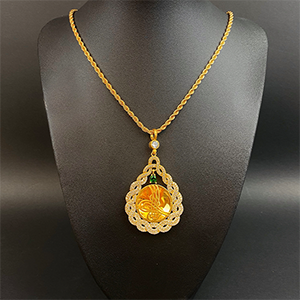
- Gold filled jewellery is made by bonding real gold to a base metal core so that the gold makes up about 5% of the item's weight, usually marked 1/20 12K or 1/20 14K.
- Gold plating applies a layer typically between 0.5 and 2.5 microns thick, with flash plating as thin as 0.175 microns, and vermeil is defined by at least 2.5 microns over sterling silver.
- Neither gold filled nor gold plated jewellery is hallmarked as gold in the UK, because the core of each is a base metal.
- Nickel release from jewellery in prolonged skin contact is capped at 0.5 micrograms per square centimetre per week under UK REACH.
Table of Contents
- What Is Gold Filled Jewellery?
- What Is Gold Plating?
- How Much Gold Is Actually in Each Finish?
- How Durable Is Each Finish?
- What Do They Cost in the UK?
- Skin Sensitivity and Nickel
- How to Identify Gold Filled and Gold Plated Items
- Caring for Both Finishes
- Which Finish Should You Choose?
- Frequently Asked Questions
For a closer look at how these finishes are labelled and sold in practice, Mad Gold İmitasyon sets out the difference between gold filled and gold plated pieces on its own product pages.
What Is Gold Filled Jewellery?
Gold filled jewellery is a base metal core permanently bonded with a layer of real gold that makes up at least 5% of the item's total weight.
Gold filled is not solid gold, and it is not plating either. Manufacturers bond a sheet of gold to a brass or copper core using heat and pressure, so the two metals fuse rather than sit on top of each other.
The gold is measured as a share of the total weight. A stamp such as 1/20 14K GF means one twentieth of the item's weight is 14 carat gold; some makers write it as 14/20. Higher carat numbers give a warmer colour.
Because the gold is a bonded sheet, it resists scratching far better than a dissolved coating. It can still wear thin over many years, but it does not rub off in patches the way plated finishes do.
In the UK, gold filled items are not hallmarked as gold, because the core is a base metal. The term works as a trade description rather than a legal purity mark, so the maker's standards matter most.
What Is Gold Plating?
Gold plating is a very thin layer of gold applied by electroplating, usually between 0.5 and 2.5 microns thick, which sits on the surface rather than bonding into the metal.
Electroplating passes an electric current through a gold solution and deposits a microscopic film onto a base metal such as brass, copper or steel. A standard decorative plate is around 0.5 microns thick.
Flash plating, sometimes sold as gold wash or gold tone, can be as thin as 0.175 microns. At that thickness the gold is purely cosmetic and can wear through within weeks on a ring or bangle.
Gold vermeil sits in between. It uses a sterling silver base with at least 2.5 microns of gold, which makes it tougher than ordinary plating but still far thinner than a gold filled layer.
How Much Gold Is Actually in Each Finish?
Gold filled pieces typically contain around 5% real gold by weight, while gold plated pieces contain well under 1%, which is why the two finishes behave so differently over time.
Comparing the two finishes by weight is clearer than comparing them by thickness. A gold filled item carries roughly one twentieth of its weight in real gold, while a plated item carries a microscopic trace.
Trade sources commonly describe gold filled as holding between 50 and 100 times more gold than a standard plated finish. That gap explains both the price difference and the difference in lifespan.
Gold does not fade by itself. The layer disappears through abrasion, and the more gold there is, the longer that takes. A well-made gold filled bracelet can outlast several plated bracelets worn in the same way.
How Durable Is Each Finish?
Gold plated jewellery usually holds its colour for a few months of daily wear, while gold filled pieces commonly keep their finish for several years with reasonable care.
Wear points such as the inside of a ring band, a necklace clasp or the edge of a bangle rub against skin and clothing thousands of times. Plated layers are usually the first to break through.
Gold filled pieces cope with that friction much better, but they are not indestructible. Chlorine, perfume and abrasive polishes gradually thin the gold, so careful habits genuinely extend the life of a piece.
Style matters too. Earrings and pendants touch little and last longer in either finish, while rings and bangles face the most abrasion and show wear first.
What Do They Cost in the UK?
Gold plated jewellery is the cheaper option, with many pieces in the UK selling for under £20, while gold filled items cost more because their real gold content is measurable.
Gold plated jewellery is cheap to produce, and in the UK much of it sells for under £20. Gold filled costs more because the gold content is real and measurable, so prices typically start higher and climb with weight.
Look at cost per year rather than cost at the till. A £12 plated necklace replaced three times costs more than a £45 gold filled piece that lasts several years in regular rotation.
Budget gifting, holiday outfits and short-lived trends are all sensible reasons to choose plating. Everyday pieces you intend to keep are usually better served by gold filled.
Skin Sensitivity and Nickel
Plated jewellery is more likely to trigger reactions because the base metal can release nickel once the gold wears, while gold filled pieces keep far more base metal covered.
Gold itself is generally well tolerated by sensitive skin. Reactions usually come from the base metal underneath, and that is where the two finishes diverge most clearly.
A plated item can release nickel once the coating wears, especially at edges and clasps. UK rules limit nickel release from items in prolonged skin contact to 0.5 micrograms per square centimetre per week.
Gold filled pieces cover the core much more thoroughly, so irritation is less likely. If you know you are sensitive, check the stamp and look for nickel-free descriptions before you buy.
How to Identify Gold Filled and Gold Plated Items
Check the stamp first: GF, 1/20 14K or 14/20 indicates gold filled, while GP, HGE or gold tone points to plating.
Start with the stamp. GF, 1/20 14K or 14/20 point to gold filled. GP, HGE, gold tone or gold wash point to plating, and HGE means heavy gold electroplate, a thicker but still plated finish.
Price and weight are the next clues. Real gold content costs money, so a large, heavy piece at a very low price is almost certainly plated, however golden it looks in photographs.
There is no UK hallmark for either finish, because neither is solid precious metal. Ask the retailer to state the base metal, the gold carat and the layer thickness in writing before you order.
Caring for Both Finishes
Remove jewellery before showering, swimming or applying perfume, and wipe it with a soft dry cloth after wear to make either finish last longer.
Remove jewellery before showering, swimming or applying perfume and lotion. Chlorine, salt water and alcohol are the main enemies of a thin gold layer, and they act faster on plated pieces.
Wipe each piece with a soft dry cloth after wear to remove oils and skin residue. Avoid abrasive polishes and ultrasonic cleaners, which strip gold rather than restore it.
Store items separately in a dry pouch or box with the clasps closed. Pieces that rub together in a drawer create exactly the friction that wears a gold layer down.
Which Finish Should You Choose?
Choose gold filled for everyday pieces you want to keep for years, and gold plated for occasional wear, statement looks or budget-friendly gifting.
Choose gold filled for pieces you plan to wear daily for years: a signature necklace, a bangle or a wedding band alternative. The higher upfront cost is offset by a much longer working life.
Choose gold plated for statement earrings, seasonal colours and gifts where the look matters more than longevity. Pairing the two lets you build a collection without overspending.
You can browse gold plated necklaces, gold plated bracelets and matching jewellery sets at Mad Gold İmitasyon to compare finishes side by side.
If you are weighing up cost against durability, gold plated necklaces are the sensible starting point because they let you test a style for a season without paying solid gold prices.
Frequently Asked Questions
Is gold filled better than gold plated?
For durability and value, yes. Gold filled carries roughly 5% real gold by weight and keeps its colour for years, while plating is measured in microns and often wears through within months of daily wear. Plating is still the cheaper choice for occasional or trend-led pieces.
Does gold filled jewellery tarnish?
The gold layer itself does not tarnish, but the base metal can if the layer is scratched through. Keeping pieces dry, wiping them after wear and storing them separately slows that process considerably and protects the finish.
Can I wear gold plated jewellery in the shower?
It is best avoided. Soap, shampoo and hot water gradually break down a thin plated layer, and chlorine speeds up the damage. Removing plated jewellery before showering or swimming is the simplest way to extend its life.
Is gold filled real gold?
It contains real gold, but it is not solid gold. A bonded layer of gold, usually 12 or 14 carat, is fused to a base metal core, and the gold typically makes up about one twentieth of the item's total weight.
Why is gold filled jewellery not hallmarked in the UK?
UK hallmarking applies to solid precious metal items above set weights. Gold filled and gold plated pieces have base metal cores, so they are exempt and are sold under trade descriptions rather than a legal purity mark.
Read the Label Before You Pay
Next time you are about to buy, open the product description and look for the words "gold filled" or "gold plated" – if it only says "gold tone" or "gold colour", treat it as costume jewellery and expect the finish to wear through with daily use.
See more