Gold filled and gold plated jewelry are two distinct ways of applying real gold to a base metal core, and that difference decides how long a piece keeps its color. Gold filled items carry a bonded gold layer that must meet a legal minimum by weight; gold plated items carry a microscopic electroplated coating. In a product photo the two look identical, which is exactly why the label matters. This guide explains how each is made, how they wear, and how to choose between them.
- Under US Federal Trade Commission rules, a gold filled item's gold layer must be at least 1/20 — 5% — of the total metal weight and must be at least 10 karats.
- Gold plated jewelry typically carries a gold coating measured in microns, commonly around 0.5 to 2.5 microns thick.
- Gold filled jewelry is commonly hallmarked '14K GF' or '1/20 12K GF,' while plated pieces are marked 'GP,' 'HGE,' or not marked at all.
Table of Contents
- What Is Gold Filled Jewelry?
- What Is Gold Plated Jewelry?
- How Gold Filled and Gold Plated Jewelry Are Made
- How Long Does Each Type Last?
- Cost, Value, and What You Actually Pay For
- Which One Is Better for Sensitive Skin?
- How to Tell Gold Filled from Gold Plated
- How to Care for Each Type
- Frequently Asked Questions
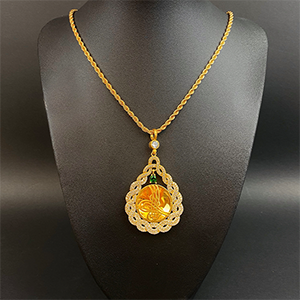
To see how these three labels actually show up on real pieces, the Mad Gold İmitasyon collection is a useful place to start.
What Is Gold Filled Jewelry?
Gold filled jewelry is a base metal core permanently bonded to a layer of real gold that must make up at least 5% of the item's total metal weight under US law.
Gold filled jewelry is not solid gold, and it is not the same thing as gold plated. It is a composite material: a base metal core, usually brass, bonded to a layer of genuine gold.
Under US Federal Trade Commission rules, that gold layer must be at least 1/20 — 5% — of the item's total metal weight, and the gold itself must be at least 10 karats. That is why the stamp 1/20 14K GF appears inside so many gold filled rings and chains.
Because the gold is bonded rather than coated, the surface survives years of ordinary wear. Many buyers treat it as the middle path between plated fashion jewelry and solid gold, which typically costs several times more.
What Is Gold Plated Jewelry?
Gold plated jewelry is a base metal coated with a very thin layer of gold, usually measured in microns, applied through an electroplating process.
Gold plated jewelry follows the same basic idea — a base metal with gold on top — but the gold layer is dramatically thinner. Commercial plating is measured in microns, and most pieces fall between roughly 0.5 and 2.5 microns.
The coating is applied by electroplating. The finished base piece is submerged in a gold-bearing solution, and an electric current deposits gold atoms onto the exposed surface.
Electroplating produces a bright, even finish at a very low cost, which is why gold plated necklaces and other plated pieces dominate the fashion jewelry market. The trade-off is a surface that thins with friction, sweat, and cleaning.
How Gold Filled and Gold Plated Jewelry Are Made
Gold filled jewelry is made by heat- and pressure-bonding a sheet of gold onto a brass core, while gold plated jewelry is made by electroplating a microscopic gold layer onto a finished base piece.
Gold filled production starts with a metal sandwich. A sheet of gold is laid over a brass core, then heat and heavy pressure fuse the two into a single solid block of stock.
That stock is rolled, drawn, and shaped into wire, sheet, or tubing. Because the bond runs through the material, cutting or bending gold filled wire still leaves gold on the exposed surface.
Gold plating works from the outside in. The base piece is fully formed first, then dipped into the plating bath where current deposits gold onto the exterior. Scratch through the plating and the base metal shows immediately.
How Long Does Each Type Last?
With normal wear, gold filled jewelry commonly holds its finish for years, while gold plated jewelry often begins to fade or wear through within one to two years.
Durability is where these two categories separate most clearly. Gold filled items carry far more gold by weight than typical plated pieces — often 50 to 100 times more — so there is simply more material to wear through.
Everyday habits matter as much as the label. Rings and bracelets rub against skin, desks, and each other. Moisture, lotion, and perfume accelerate the breakdown of a thin plated surface.
Gold filled jewelry can still dull and may need occasional polishing, but the gold layer generally stays intact. Plated jewelry usually reveals its base metal first at high-friction points: the underside of a ring, the clasp of a chain, the edge of a pendant.
Cost, Value, and What You Actually Pay For
Gold filled jewelry typically costs two to five times more than comparable gold plated jewelry because it contains substantially more real gold by weight.
The price gap comes down to gold content. The 5% minimum required for gold filled means a single item holds real gold worth far more than a micron-thin plating — and the spot price of gold affects that cost directly.
If you plan to wear one piece daily for years, gold filled often works out cheaper per year of wear. If you like to rotate styles, gold plated bracelets and similar plated pieces offer the same look at the lowest entry price.
Neither category is an investment. Solid gold retains melt value; gold filled and gold plated jewelry are valued for the way they look, not for resale.
Which One Is Better for Sensitive Skin?
Gold filled jewelry is generally the safer choice for sensitive skin because its thicker gold layer limits direct contact between skin and the base metal.
Most jewelry reactions come from the base metal, most often nickel, rather than from gold itself. A plated piece with a worn spot can expose that metal directly to the skin.
Gold filled pieces present more gold at the surface, so irritation is less likely during everyday wear. They are not a medical guarantee, though — anyone with a known metal allergy should test a new piece on a small area first.
For shoppers who want a gentler option without solid gold prices, gold plated earrings made with nickel-free base metals are a practical middle ground.
How to Tell Gold Filled from Gold Plated
The fastest way to tell them apart is the hallmark: gold filled pieces are stamped with marks like 14K GF or 1/20 12K GF, while plated pieces carry GP, HGE, or no mark at all.
Start with the stamp. 1/20 14K GF, 14K GF, or 1/10 12K GF all indicate gold filled. GP, HGE, gold electroplate, or a blank surface usually means plated.
Stamps can wear away, so also inspect the edges and the high-wear spots. A plated piece that has seen regular use often shows a slightly different color at the corners, on the back, or under the clasp.
Price is another clue. A gold filled chain at $60 is plausible. A solid gold chain of the same size at $60 is not, and neither is a claim of heavy gold content on a piece priced like costume jewelry.
How to Care for Each Type
Both types last longer when kept away from water, perfume, and abrasive cleaners, but gold plated pieces need gentler handling and more frequent attention.
Put jewelry on last, after lotion and perfume have dried, and take it off before swimming, showering, or cleaning. Chlorine, salt water, and household cleaners all shorten the life of a gold layer.
Wipe pieces with a soft dry cloth after wear. Gold filled items handle a mild soap-and-water wash well if you dry them thoroughly afterward. Skip polishing cloths made for solid gold, which can be too abrasive for thinner surfaces.
Store pieces separately in a dry pouch. Metal-on-metal contact creates tiny scratches that speed up wear, particularly on plated jewelry. Browsing the full Mad Gold İmitasyon collection makes it easier to match care habits to each piece you own.
Since moisture and metal-on-metal contact dull plating faster than anything else, gold plated necklaces deserve their own pouch or a separate slot in your jewelry box.
Frequently Asked Questions
Is gold filled better than gold plated?
For durability and long-term value, yes. Gold filled jewelry contains far more gold by weight and keeps its finish much longer. Gold plated jewelry wins on upfront price and design variety, so it suits pieces you wear occasionally or replace as trends change.
Does gold filled jewelry tarnish?
The gold layer does not tarnish the way silver does, but the surface can dull and collect residue from skin oils, lotions, and humidity. A gentle soap-and-water wash followed by a soft dry cloth usually restores most of the shine.
Can you wear gold plated jewelry every day?
You can, but it will age faster. Daily friction, sweat, and repeated contact with water gradually wear through the thin plating, usually first at high-contact points like the clasp or the underside of a ring. Removing pieces before showers and workouts extends their life noticeably.
Is gold filled jewelry real gold?
It contains real gold, but the item is not solid gold. A gold filled piece is a base metal core bonded to a gold layer that must equal at least 1/20 of the total metal weight under US Federal Trade Commission rules.
Where is the hallmark usually stamped?
Most stamps sit on the clasp, the inner band of a ring, or the back of a pendant. These areas see less friction than the outer surface, so the mark stays readable longer on both gold filled and gold plated pieces.
Read the Label on One Piece You Already Own
Go to your jewelry box, pick a single piece, and check whether its label, tag, or receipt says gold filled, gold plated, or nothing at all — then store it according to that answer.
See more