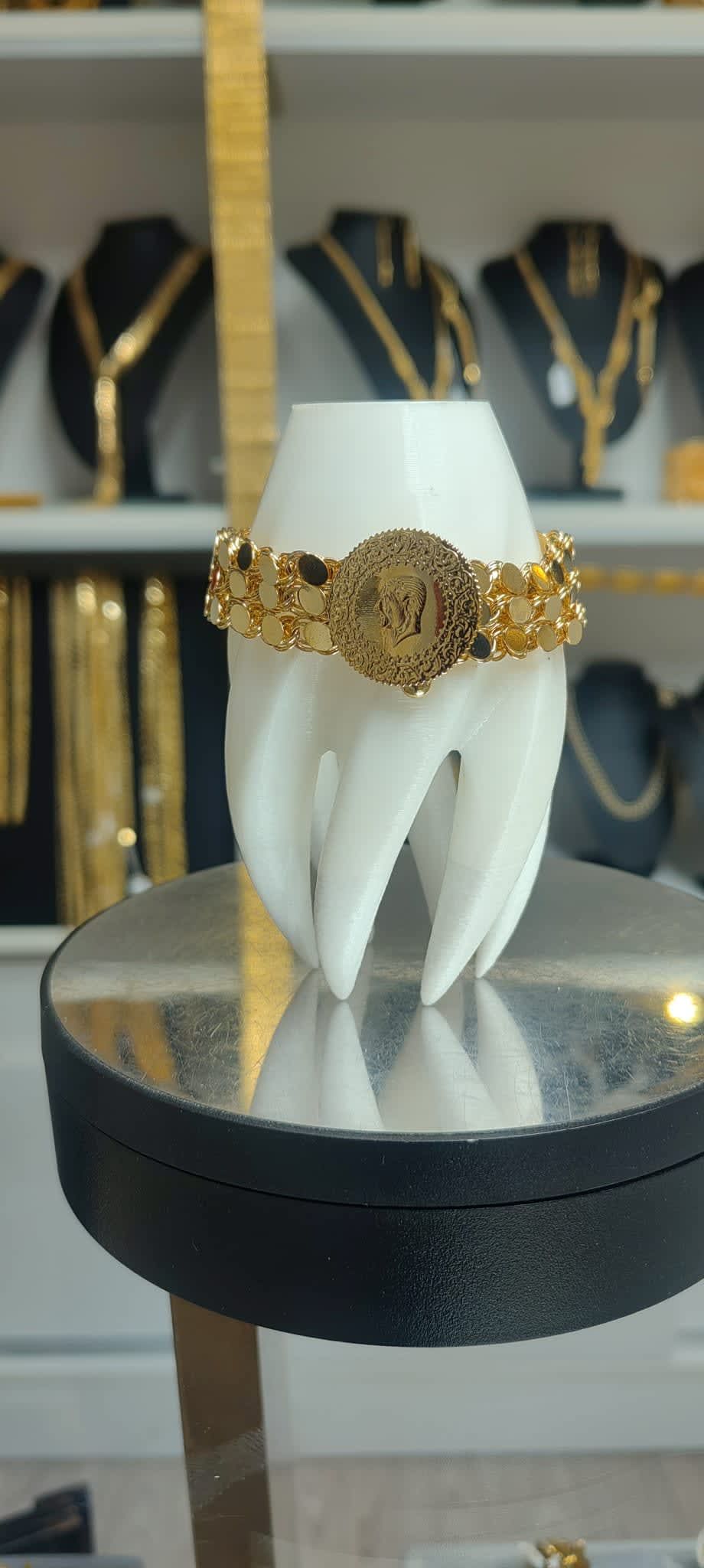
Gold prices are hitting new records every day, and many women are thinking, "Can I protect my budget without sacrificing aesthetics?" At this point, imitation ata lira stands out as a smart alternative that offers the visual splendor of real gold at a much more accessible cost. Additionally, while working in this industry for years, the most common question I hear from our customers is: "How can I tell it apart from the real one?" Don't worry — in this article, I explain everything from coating quality to maintenance tips, model selection to warranty conditions, and more.
Actually, the concept of imitation ata lira is not new. However, with gold prices reaching historic highs per gram in the last few years, demand for these products has significantly increased. Consequently, many different quality products are circulating in the market; knowing which one to choose is now more critical than ever.
What is Imitation Ata Lira?
Everyone knows the iconic design of the Republic gold or Ata lira. That familiar face, that embossed craftsmanship, that warm gold tone... Imitation ata lira is an ornamental accessory that recreates this visual identity by applying gold plating over a base metal of brass or copper alloy. It does not contain real gold; but with the right coating thickness and quality craftsmanship, it offers an appearance almost indistinguishable from the real thing.
The most common material used as base metal is brass. Indeed, brass provides an ideal surface for plating due to its yellow tone close to gold. Moreover, some premium models use copper alloys; this material offers better plating adhesion and minimizes the risk of allergic reactions.
How Many Karat Coatings Are There?
The coating karat is the most critical factor directly determining both the appearance and durability of imitation ata lira. Therefore, three main options are available:
- 14 karat gold plating: 0.3–0.5 microns thick, provides sufficient durability for daily use.
- 18 karat gold plating: 0.5–1 micron, premium mid-range; a noticeable difference in color depth and brightness is felt.
- 22 karat gold plating: 1–2 microns thick, the most intense and longest-lasting coating; this is the closest option to real gold appearance.
On the other hand, coatings produced with the PVD (physical vapor deposition) method yield much more resistant results against chemical and mechanical effects. Consequently, models using this method can last approximately twice as long compared to standard electrolytic plating.
Coating Quality and Durability
Last month, a customer who came to our store asked exactly this: "The imitation ata lira I bought tarnished in three months, what should I do?" When we examined the product, it turned out to be a undocumented product with coating thickness below 0.2 microns. So, the point is: Coating thickness is measured in microns, and the higher this number, the longer the lifespan.
"Imitation gold coins attract great interest for collection and decorative purposes. Thus, these products, which are exact replicas of the original in weight and size, offer a visually perfect alternative."
— Ali Rıza Şen, Numismatics Expert

Imitation Handled Ata Lira Jewelry - ALL01 Presented to you by Mad Gold brand, this Imitation Gold Necklace | Imitation Gold Neck jewelry will win your appreciation with its classic and elegant design. Pi
₺750.00
View ProductWith care, a 22 karat gold plated imitation ata lira can maintain its initial shine for 2–3 years. To summarize, moreover, this duration varies depending on usage frequency, contact with moisture and sweat, and exposure to perfume and chemicals. However, even a 14 karat coating can last 12–18 months without issues with regular maintenance — which is well above many people's expectations.